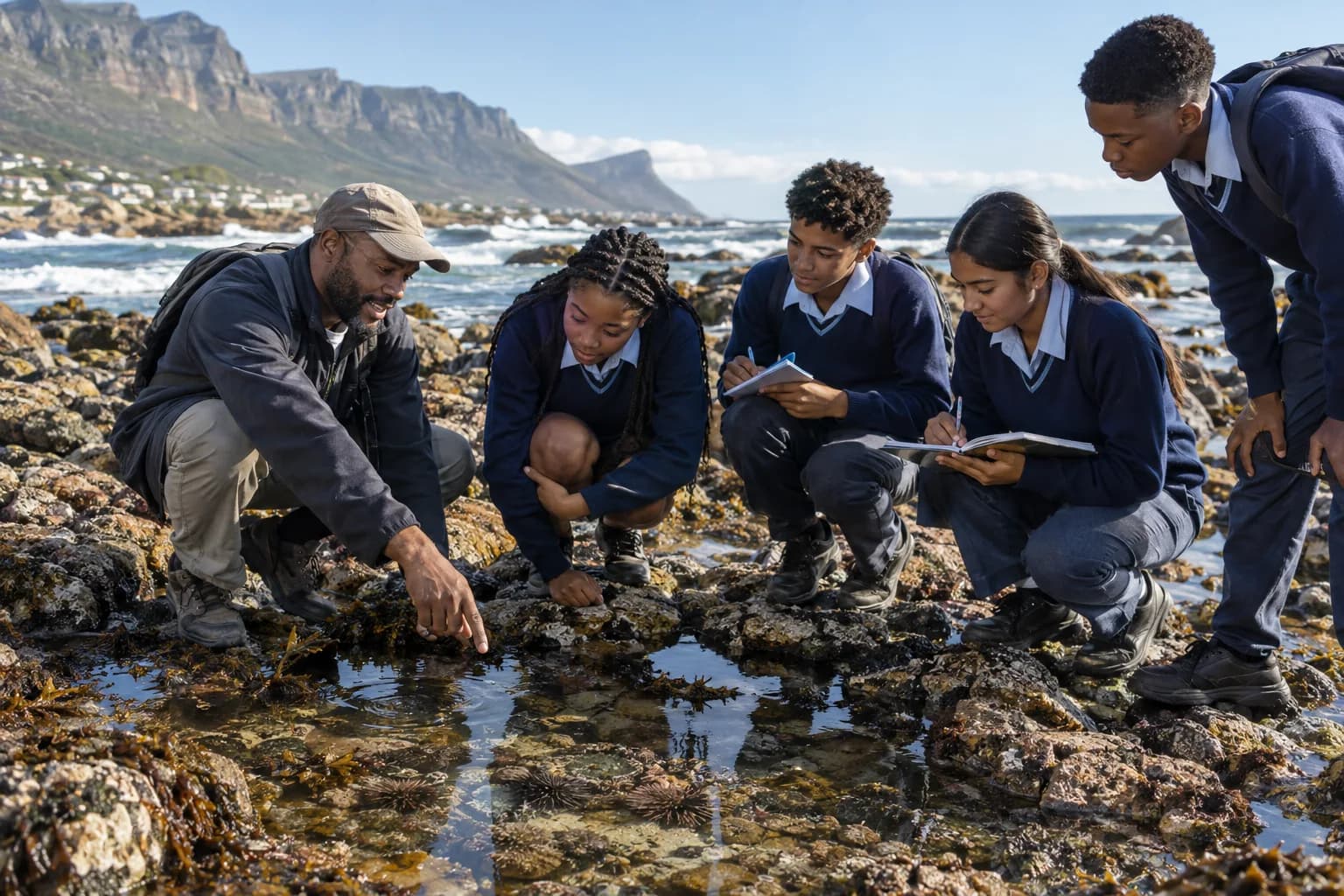
Real-world learning, with purpose.
Open up conversations about the people, skills and pathways behind different careers. Work with EduWay to shape an educational experience around your school's learning objectives. The setting, activities and final programme are agreed during planning.
Who it’s for
Schools exploring meaningful learning for Grades 6–9. We begin with your learners’ needs, classroom topics and objectives.
Grades 6–7
Early career awareness activities focused on exploring different work roles and industries. Learners are encouraged to ask questions and think about what kind of work interests them — without the pressure of subject choices yet.
Grades 8–9
Structured workplace and industry exposure designed to sit alongside the Grade 9 subject-choice process. Learners visit real working environments, interact with professionals, and work through a facilitated reflection exercise that makes the visit educationally useful rather than just a day out.
Learning outcomes
Learning aims to discuss when shaping your programme:
- Connect personal interests with possible career pathways.
- Prepare thoughtful questions about the world of work.
What learners do
Structured, facilitated activities and guided reflection connect practical experience with classroom learning.
Example activities
- Structured workplace observation
- Career interaction session
- Industry problem-solving task
- Professional communication exercise
- Subject-choice reflection workshop
Sample activities indicate the learning approach. The final programme outline is agreed with your school.
Programme format
One-day / Overnight. Programme planning establishes the final activities, schedule and venue.
What your school receives
- Programme outline
- Day schedule
- Parent communication template
- Consent documentation
- Learner information checklist
- Preparation notes
- A single EduWay coordinator
How planning works
Initial enquiry → programme planning → admin preparation → confirmation. Your school receives an outline and schedule before a deposit is required. Allow at least 2–3 weeks for one-day programmes and 4–6 weeks for overnight programmes.
See the planning process