Real-world learning, with purpose.
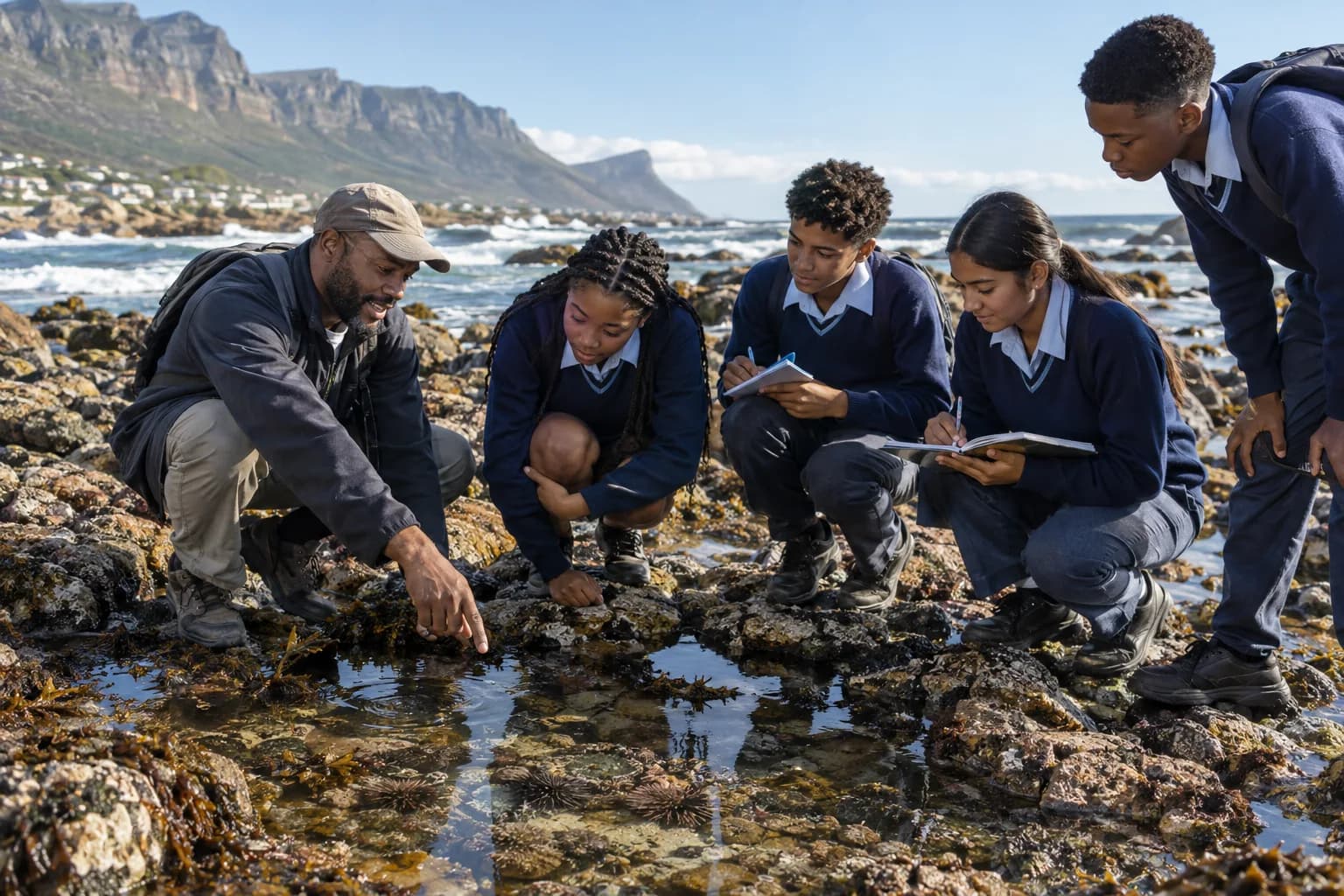
Take learning outdoors and explore our relationship with the natural world. Work with EduWay to shape an educational experience around your school's learning objectives. The setting, activities and final programme are agreed during planning.
Who it’s for
Schools exploring meaningful learning for Grades 6–9. We begin with your learners’ needs, classroom topics and objectives.
Grades 6–7
Field-based observation and guided investigation activities. Learners develop the habit of observing carefully, recording what they find, and discussing it in a structured way. Focus is on building curiosity and basic scientific fieldwork skills.
Grades 8–9
More analytical fieldwork. Learners investigate local ecosystems or environmental challenges, work through a sustainability problem with real constraints, and present their findings. Connects well with Natural Sciences and Geography content.
Learning outcomes
Learning aims to discuss when shaping your programme:
- Observe relationships in a natural environment.
- Discuss practical responses to environmental challenges.
What learners do
Structured, facilitated activities and guided reflection connect practical experience with classroom learning.
Example activities
- Coastal or marine ecosystem fieldwork
- Habitat observation and field journalling
- Water systems investigation
- Sustainability resource challenge
- Guided environmental problem-solving
Sample activities indicate the learning approach. The final programme outline is agreed with your school.
Programme format
One-day / Overnight. Programme planning establishes the final activities, schedule and venue.
What your school receives
- Programme outline
- Day schedule
- Parent communication template
- Consent documentation
- Learner information checklist
- Preparation notes
- A single EduWay coordinator
How planning works
Initial enquiry → programme planning → admin preparation → confirmation. Your school receives an outline and schedule before a deposit is required. Allow at least 2–3 weeks for one-day programmes and 4–6 weeks for overnight programmes.
See the planning process